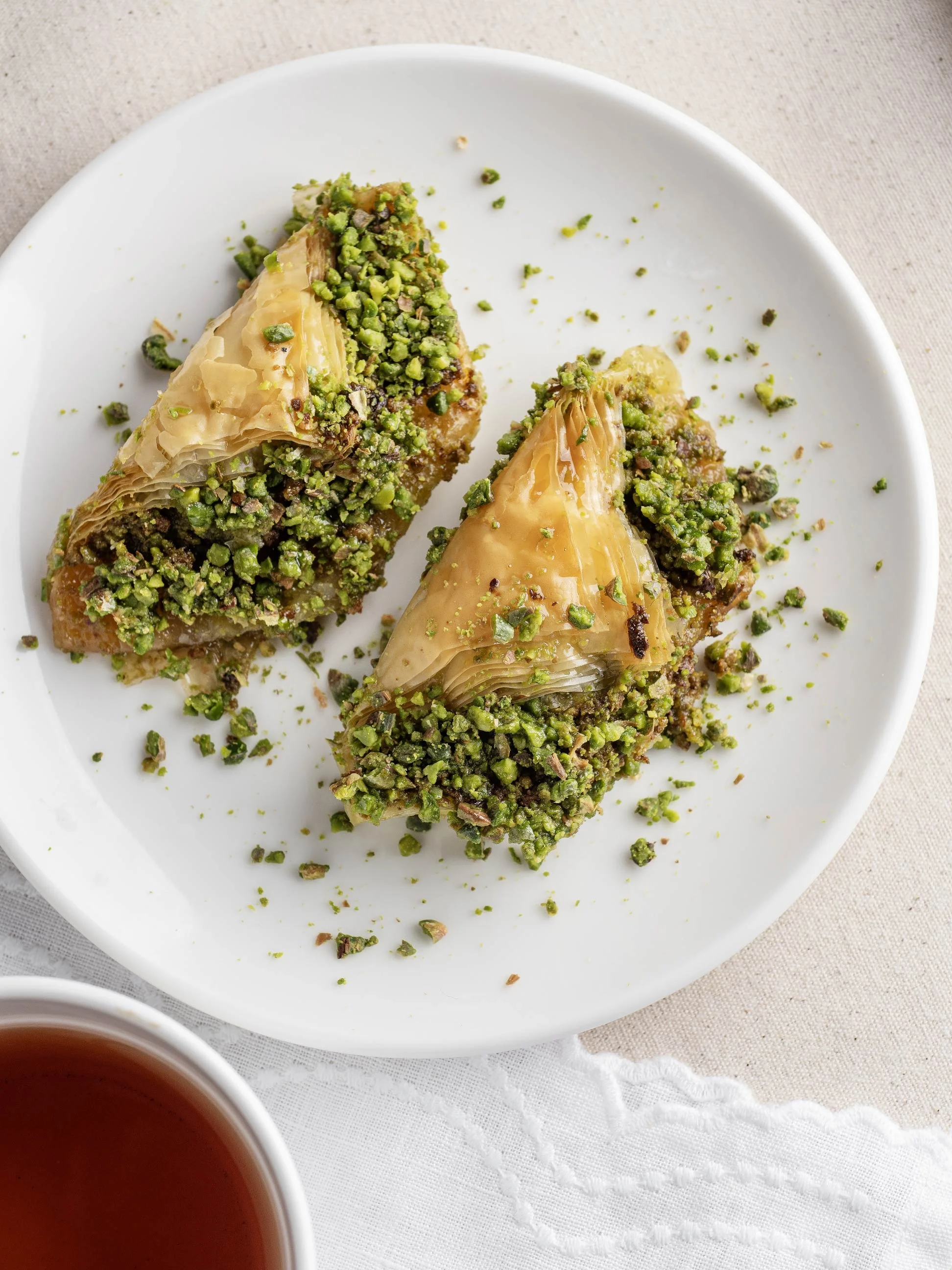
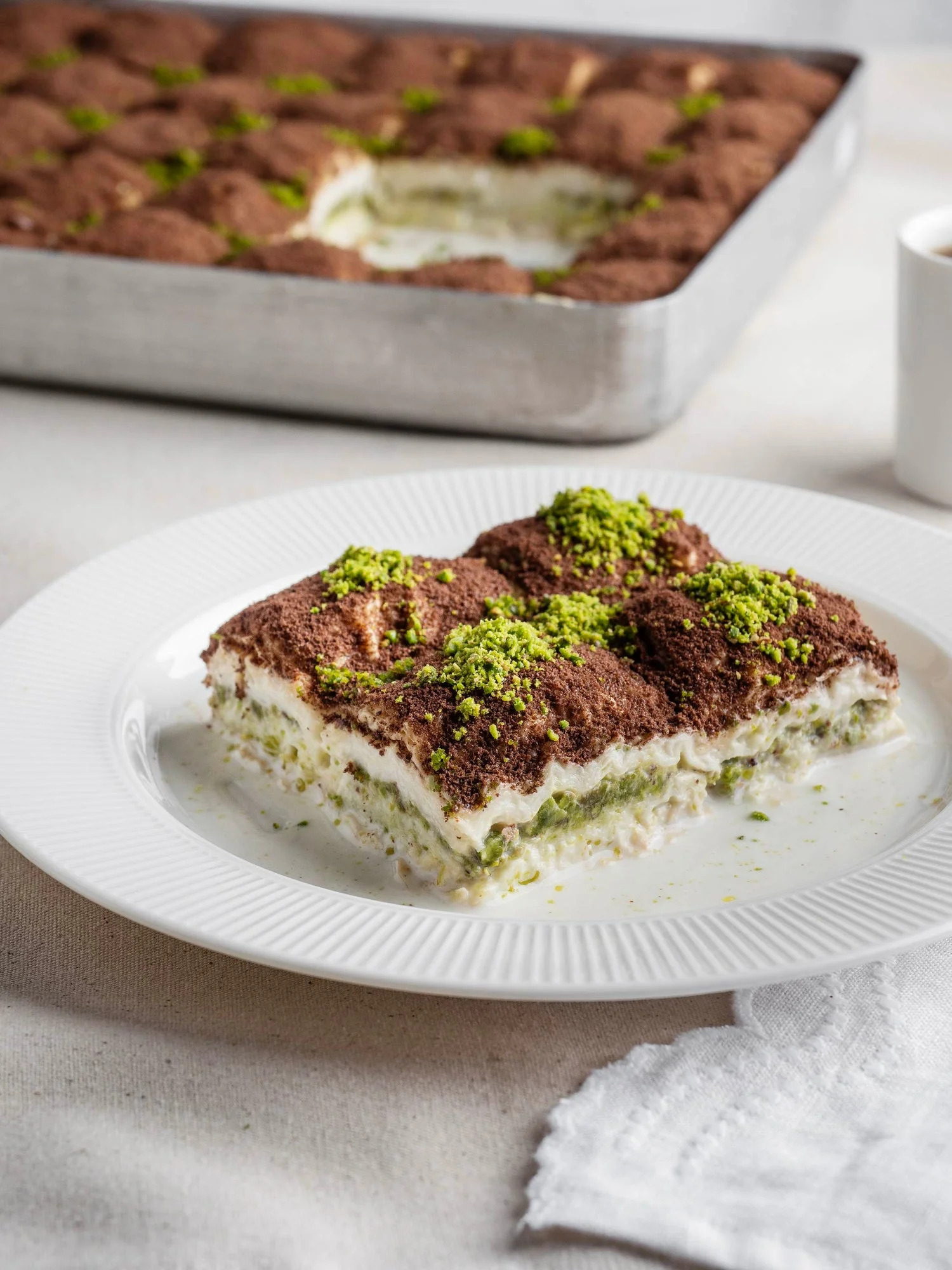
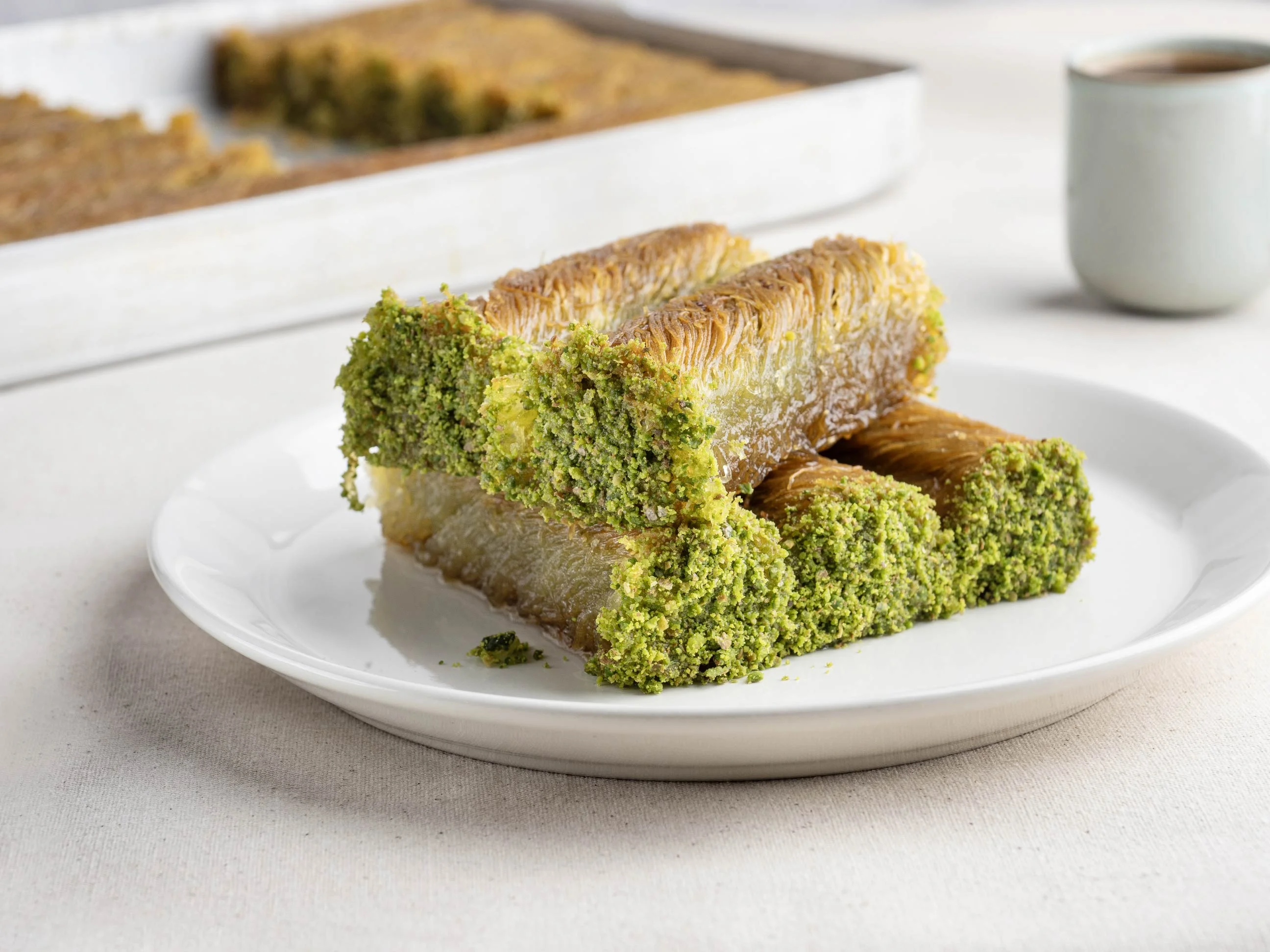
To understand Saytad Baklava, you must first understand what it means to be a family from Gaziantep. Not merely to have been born there, or to have spent a few formative years in its winding bazaars and pistachio-scented streets — but to carry it with you, deeply and permanently, the way a language learned in childhood never fully leaves the tongue. The Özsaygılı family has roots in Gaziantep that stretch back centuries. Generations of the family lived, worked, and built their lives in the city that the world would eventually recognise as the undisputed capital of baklava. When they finally left, they did not leave lightly — and they never left entirely.
This is the story of how a family's journey from Gaziantep to Istanbul unfolded over half a century, through three generations, two industries, and one extraordinary dessert that bound it all together.
Gaziantep: A City That Carries Its Flavours
Gaziantep is not a city that lets its children forget where they come from. Its food — and baklava above all — is a form of cultural memory so potent that it can conjure an entire childhood in a single bite. The European Union has recognised this with a Protected Geographical Indication status for Antep Baklava, the same legal framework that protects Champagne and Parmigiano-Reggiano. UNESCO designated Gaziantep a Creative City of Gastronomy in 2015. These are not empty honours. They are the official acknowledgment of something that every family from Gaziantep already knows: the city's culinary traditions are among the most refined and fiercely preserved in the world.
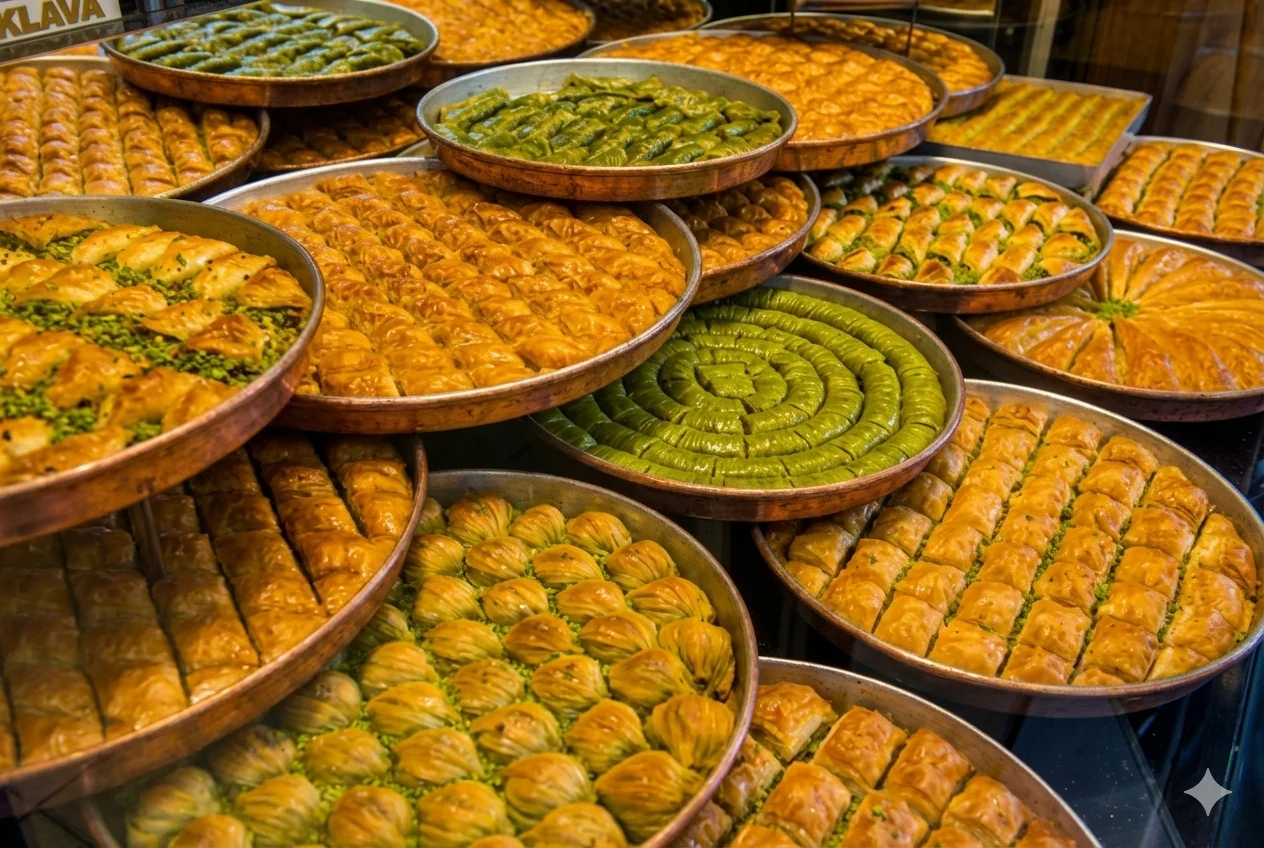
For a family like the Özsaygılıs, with roots sunk deep into Gaziantep's soil across generations, this heritage was not abstract. It was the smell of the kitchen on a holiday morning. It was the sound of a rolling pin on a wooden board, the particular hiss of clarified butter meeting hot dough, the cool sweetness of syrup poured at just the right moment. These were not techniques to be learned later — they were the texture of daily life, absorbed long before anyone thought to call them a craft.
Adil Özsaygılı: The Patriarch Who Crossed the Bridge
In 1971, Adil Özsaygılı made a decision that would define the next fifty years of his family's history. Like tens of thousands of Anatolians in that era of rapid urbanisation, he looked toward Istanbul — then as now Turkey's greatest city, its economic engine and cultural crossroads — and decided that the future he wanted for his family lay there. He packed what he needed, said farewell to the city that had shaped him, and made the journey west.
Adil was not a confectioner. He was a practical man with a sharp eye for opportunity, and what he saw in Istanbul's rapidly expanding districts was not a gap in the baklava market, but a gap in the automotive services market. Istanbul in the early 1970s was a city in the midst of a profound transformation — private car ownership was rising, new neighbourhoods were spreading outward from the historic core, and the infrastructure of daily life was struggling to keep pace. Adil established himself in the car service business, building a reputation for reliability and honest work that would become the hallmark of everything the Özsaygılı family touched.
"He came with the values of Gaziantep — precision, pride in craft, refusal to cut corners — and he applied them to everything he built in Istanbul."
What Adil brought from Gaziantep was not a recipe or a trade secret. It was something harder to name and more durable: a set of values about how work should be done. In Gaziantep, the standards of craft — whether in baklava-making, copper-working, or any other trade — are enforced not by regulation but by reputation. A family's name is its most valuable asset, and it is earned slowly and lost quickly. Adil carried this understanding with him to Istanbul, and it shaped the kind of businessman he became: meticulous, proud, unwilling to compromise quality for the sake of convenience or short-term profit.
1971
Adil Özsaygılı moves to Istanbul
3
Sons who carried his legacy forward
2007
Saytad Baklava founded
The Second Generation: Three Brothers, One Foundation
Adil and his wife raised three sons in Istanbul, each of them shaped equally by the city they grew up in and the city their father had left behind. Mehmet Nuri Özsaygılı, İrfan Özsaygılı, and Bülent Özsaygılı — the eldest, the middle, and the youngest — grew up in a household where the Gaziantep identity was kept alive not as nostalgia but as active practice. The table was set with the flavours of the southeast. The standards of work were those their father had brought with him from Antep. And the family's story — the decision to leave, the difficulty of starting over, the slow accumulation of trust and reputation — was told and retold until it became the scaffold on which each brother built his own understanding of what it meant to be an Özsaygılı.
Together, the three brothers took what their father had built in the car service business and expanded it. They did not simply inherit Adil's enterprise — they grew it, diversified it, and stamped it with their own energies and capabilities. Mehmet Nuri brought to the business a particular instinct for the retail side: how to meet a customer, how to understand what they needed, how to build the kind of trust that turns a first-time buyer into a lifelong one. İrfan and Bülent complemented him with a talent for operations and production — the practical, hands-on work of making things well and making them consistently. In this natural division of roles, the brothers found an equilibrium that would later prove essential when the family pivoted to an entirely different industry.
2007: The Year Baklava Came Home
By the mid-2000s, the Özsaygılı brothers had built a solid and respected presence in Istanbul's business community. The car service legacy their father had established was thriving. But something had been quietly accumulating in the background of all three brothers' lives: a growing conviction that the baklava available in Istanbul — even in the best pastry shops of the city — was simply not good enough. It was not Gaziantep. It was not what they had grown up tasting at home, at family gatherings, at the table their father had set with the flavours of his birthplace. The gap between what was available and what they knew was possible had become, over the years, impossible to ignore.
In 2007, the family made its move. The decision to enter the baklava business was not impulsive — it was the culmination of decades of accumulated knowledge, a lifetime of tasting the real thing, and the clear-eyed recognition that a market existed for baklava made to Gaziantep standards in Istanbul. The third generation of Özsaygılıs would carry forward their grandfather's Anatolian roots in the most direct and delicious way imaginable.
"We did not enter the baklava business to make a living. We entered it because we could not accept that Istanbul should go without the real thing."
A Perfect Division: Production and the Brand
What made the Özsaygılı family's entry into the baklava world sustainable — and ultimately extraordinary — was the same natural division of roles that had served the brothers so well in their earlier ventures. İrfan and Bülent Özsaygılı took charge of production. With the same meticulousness their father had brought to the car service business, they built a production operation in Istanbul that held itself to a single standard: Gaziantep quality, every single day, without exception.
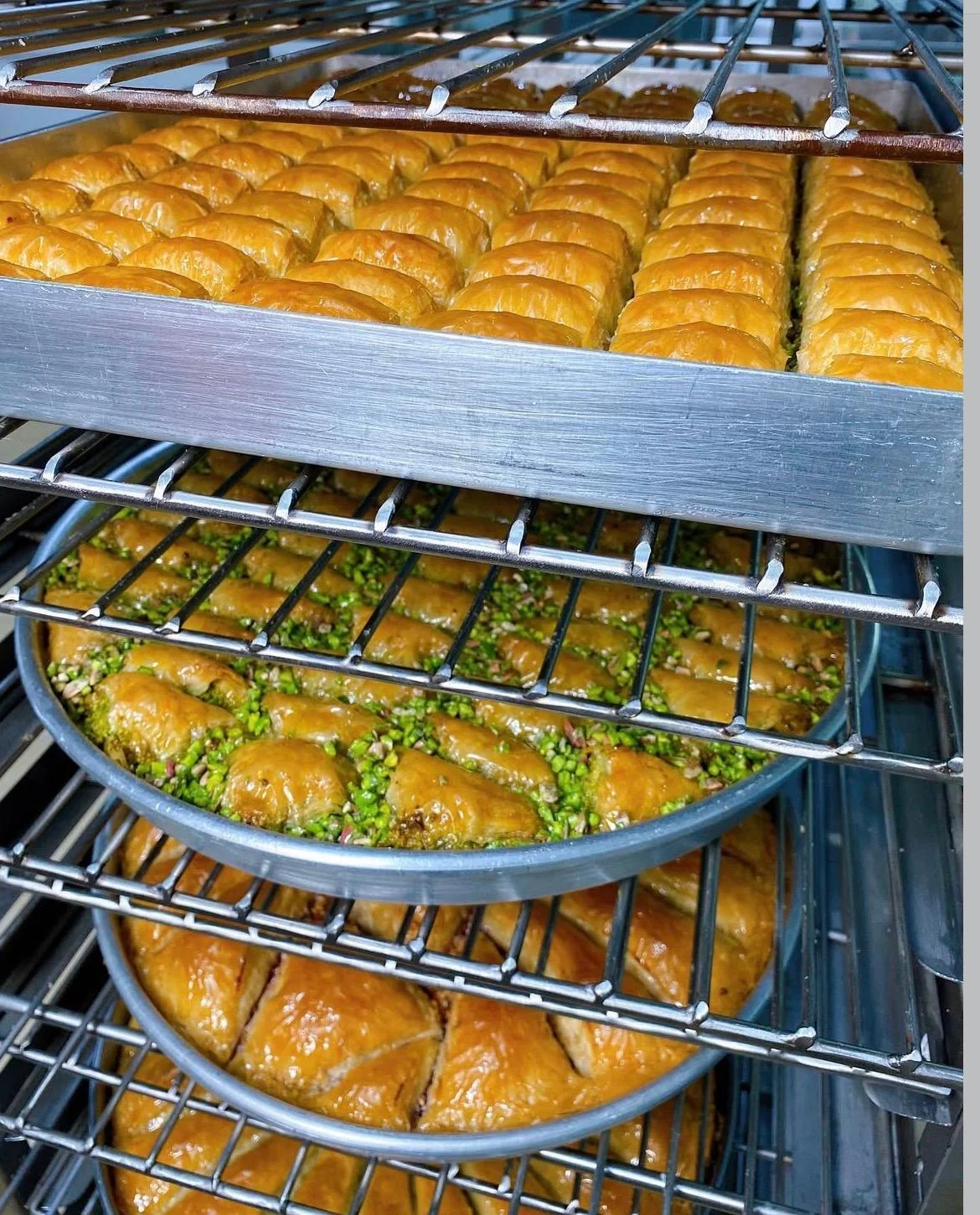
This was harder than it sounds. Authentic Antep baklava demands stone-ground pistachios sourced directly from Gaziantep's orchards — not the commercial varieties available elsewhere, which are larger, less intensely flavoured, and processed in ways that sacrifice the vibrancy of colour and taste that defines genuine Antep fıstığı. It demands pure clarified butter, rendered slowly and carefully, with none of the vegetable oil shortcuts that allow lesser producers to cut costs. It demands hand-rolled yufka, stretched by skilled hands to a translucency that no machine has matched. And it demands syrup made fresh, poured at precisely the right temperature, and allowed to settle into the pastry at its own pace. İrfan and Bülent built a production environment where all of these non-negotiables were simply the baseline — the minimum standard below which nothing left the kitchen.
Meanwhile, Mehmet Nuri Özsaygılı turned his attention to the other half of the equation: bringing this baklava to the people who deserved to taste it. He created the Saytad brand — a name that would stand, in the Istanbul market, for precisely what the family had decided it would stand for: authentic Gaziantep baklava, made without compromise, available to anyone who sought it out. The retail operation he built was an extension of the same values his father had modelled in the car service business: transparent, reliable, and built for the long term rather than the quick return.
What Three Generations Have Built
Today, Saytad operates from two locations in Istanbul — Bahçeşehir and Yeşilköy — and serves customers who have tasted genuine Antep baklava and refuse to accept substitutes. The brand ships its products to customers across Turkey and internationally, carrying the flavours of Gaziantep to tables that might otherwise never encounter the real thing. Behind every tray that leaves the Saytad kitchen is the weight of a family story that spans more than five decades: Adil's courage in 1971, the brothers' years of building and learning, and the third generation's decision to honour that history with something that would last — something that could be tasted.
We still source our pistachios directly from Gaziantep. We still render our own clarified butter. We still roll yufka by hand, in the Antep tradition, to a thinness that no commercial phyllo manufacturer has replicated. We still pour our syrup with the patience and precision that the craft demands. These are not romantic gestures toward a lost past. They are the specific, technical choices that make Saytad's baklava taste the way it does — and they are the choices that connect every tray we make to the orchards of Gaziantep, to Adil Özsaygılı's table in Istanbul, and to the conviction, shared across three generations of the same family, that quality is never a variable.
Baklava is a form of memory. It is the way a family from Gaziantep keeps faith with the city that made them, long after the distance between the two has grown to hundreds of kilometres and many decades. Every tray Saytad makes is a continuation of that faithfulness. Gaziantep is still here — in the pistachios, in the butter, in the craft, and in the name of a family that never forgot where it came from.