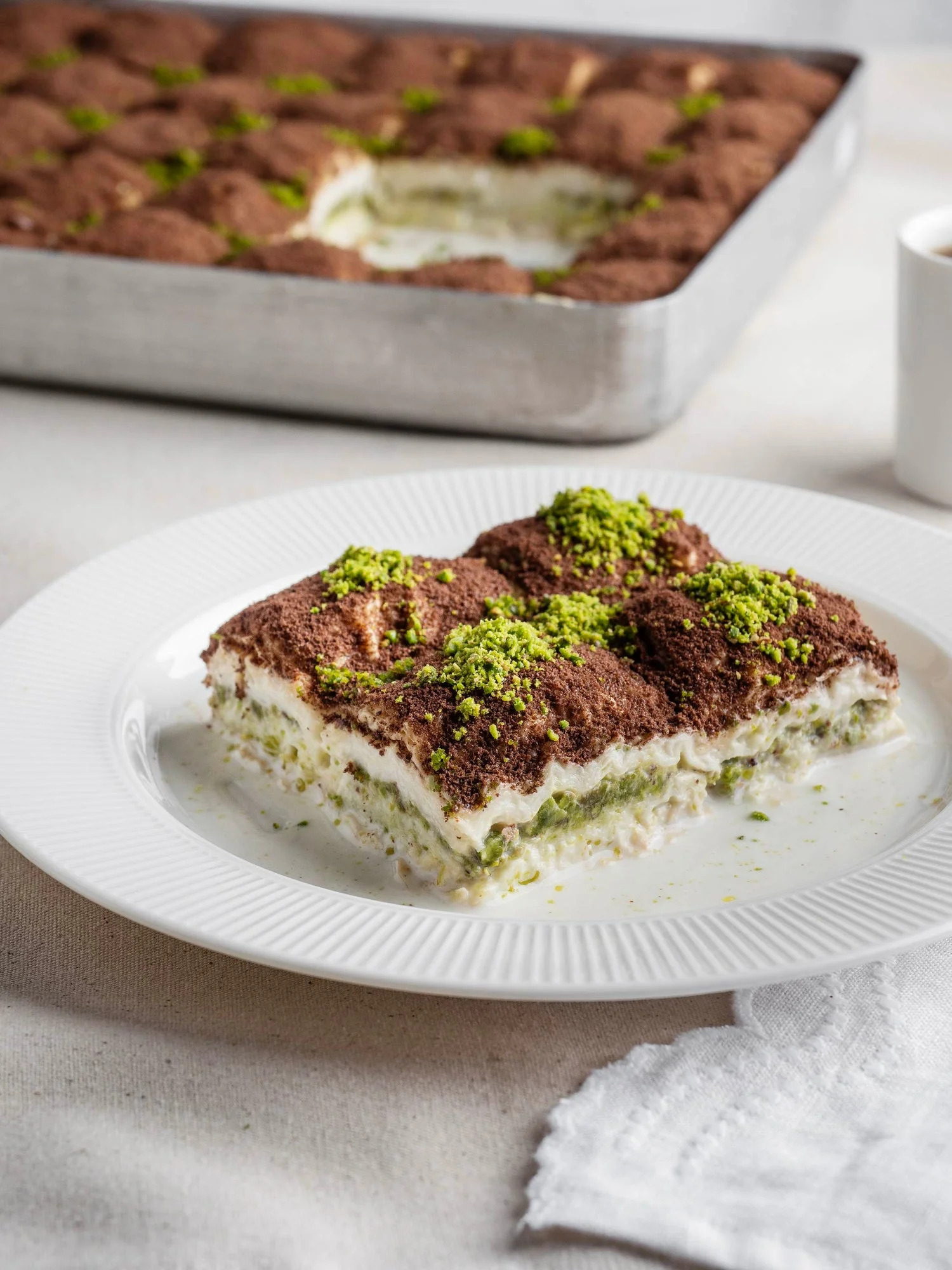
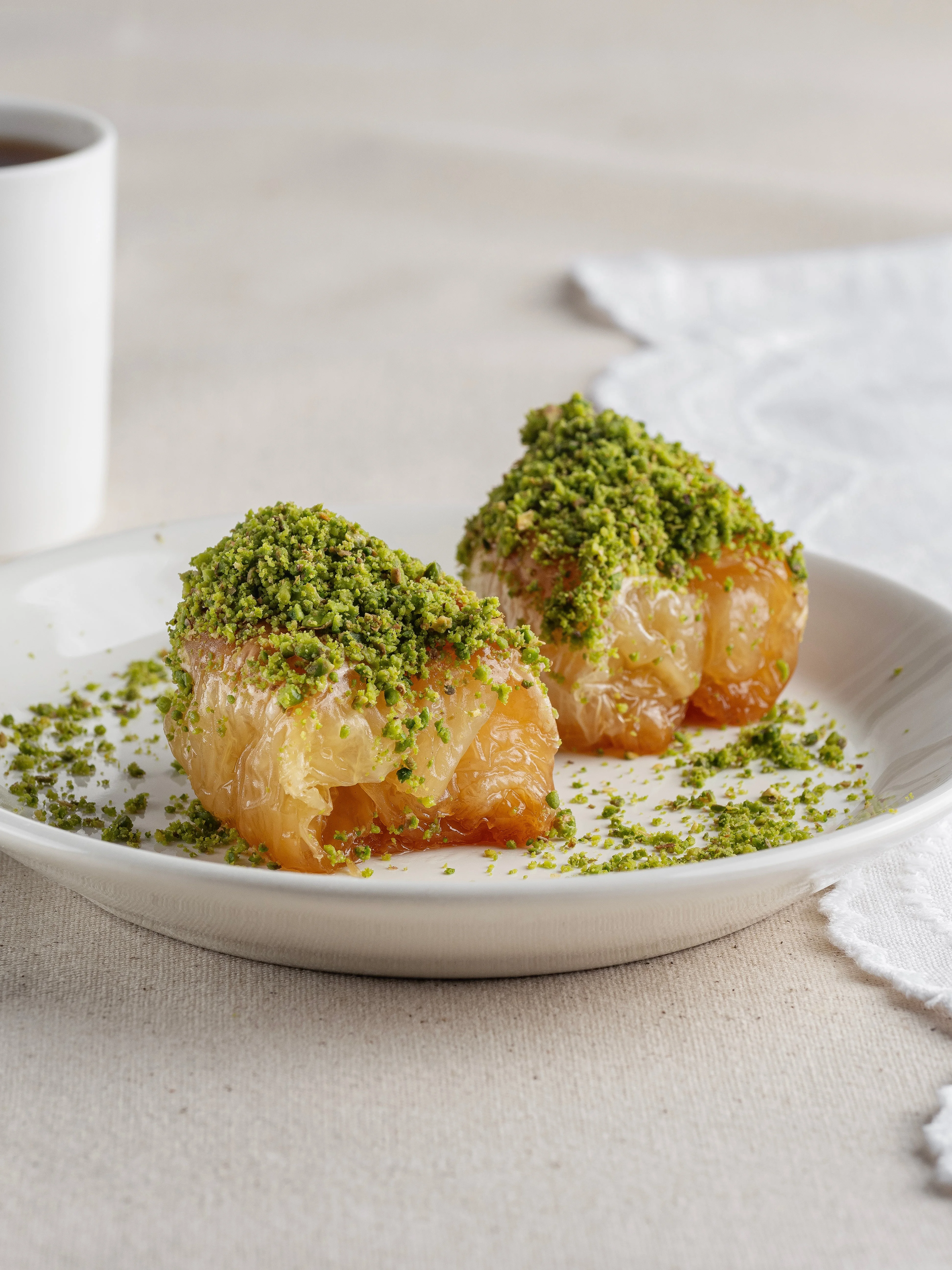
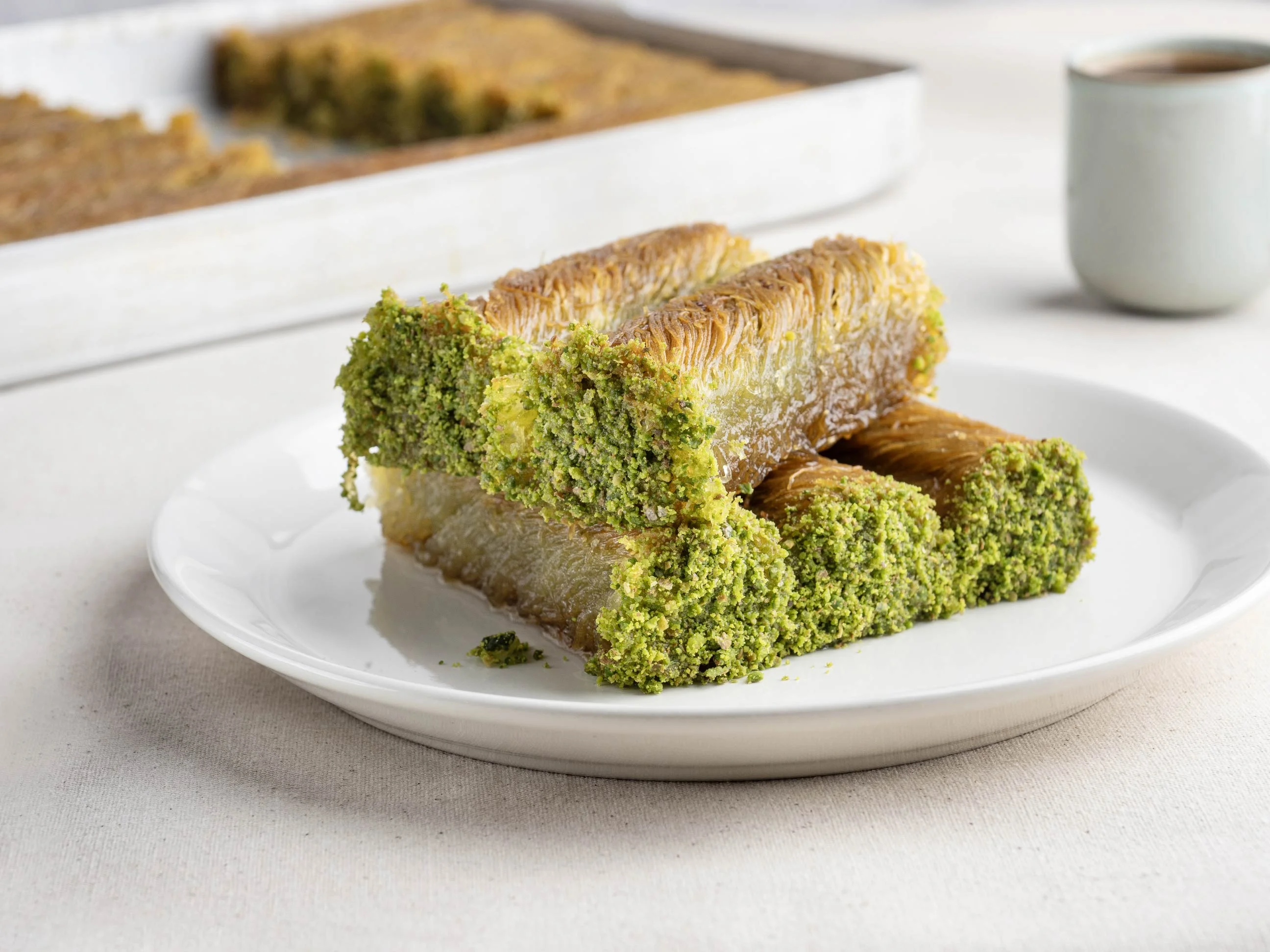
There are desserts, and then there is baklava. Few foods in the world can claim a lineage that winds through palace kitchens and ancient civilisations, that inspired territorial disputes between nations, and that remains — even now, after centuries of refinement — almost entirely unchanged from the technique that made it famous. Baklava does not need updating. It does not need reinventing. It needs only to be made properly, with the right ingredients, the right hands, and the right understanding of why every step in a process that cannot be rushed was designed exactly as it was. At Saytad, we make baklava the old way. Not because we are romantic about tradition for its own sake, but because the old way happens to produce something extraordinary, and no shortcut has ever come close to matching it. This is the full story of how baklava is made — from the ancient grain fields of Anatolia to the copper-bottomed ovens of Gaziantep, from the sultan's table to yours.
Ancient Roots, Ottoman Perfection
The story of baklava begins not in Turkey but in the ancient Assyrian empire, around 800 BC, where the earliest ancestors of the dessert — rough layers of thin bread dough, chopped nuts, and honey, baked together for harvest festivals and military celebrations — were already being enjoyed across the region that is today northern Iraq and Syria. Clay tablets from the period describe sweetened bread preparations with nuts, and archaeologists have identified fragments of baking moulds consistent with layered pastry production from as early as the ninth century BC. These were not baklava as we know it — the phyllo technique did not yet exist, and butter was not yet the fat of choice — but they represent the instinct, the cultural impulse, that would eventually find its highest expression in the Ottoman pastry kitchen.
The phyllo tradition itself likely arrived via ancient Greece and Byzantium, where paperlike sheets of dough called filo — from the Greek word for "leaf" — had been stretched across kitchen tables for centuries. Byzantine bakers made a dessert called koptoplakous, a layered nut pastry that bore enough structural resemblance to baklava that food historians have long considered it a direct ancestor. When the Ottomans conquered Constantinople in 1453, they inherited a city with a sophisticated pastry culture and a kitchen staff of considerable skill. What they did with it was extraordinary.
The imperial kitchens of Topkapi Palace in Istanbul were where baklava was transformed from a provincial sweetmeat into a refined art form, during the golden age of the fifteenth and sixteenth centuries. The palace employed hundreds of specialist cooks — each guild responsible for a specific category of food — and the pastry division, the helvahane, was among the most prestigious. Palace food registers from the late seventeenth century record the annual consumption of enormous quantities of sugar, pistachios, and clarified butter flowing into the helvahane. The sultan's pastry chefs were among the most celebrated craftsmen in the empire. Their techniques were jealously guarded, passed from master to apprentice in a system that ensured each generation could stretch dough thinner than the last.
It is no exaggeration to say that baklava was a political instrument. A gift of baklava from the imperial kitchens was a mark of favour, a symbol of prestige, a tangible expression of Ottoman refinement and abundance. The Topkapi helvahane at its height employed dozens of specialist confectioners in its pastry division alone, each sworn to secrecy about palace recipes — an institutional secrecy that helped concentrate baklava-making knowledge among a very small group of masters. Most famously, the Janissary corps — the elite military unit that formed the backbone of Ottoman military power — participated in a celebrated ritual called the Baklava Alayı, or the Baklava Procession, which took place on the fifteenth day of Ramadan each year. Enormous trays of baklava were carried from the palace kitchens through the streets of Istanbul in a formal procession, delivered to the barracks as a reward for the soldiers' service and loyalty. The ritual persisted for centuries and gave baklava an additional layer of symbolic weight: it was not merely food, but a statement of relationship between the ruler and the ruled. To receive baklava from the sultan was to be seen, valued, and remembered. The Baklava Alayı came to an abrupt end in 1826, when Sultan Mahmud II disbanded the Janissary corps entirely in an event the Ottomans themselves called the Vaka-i Hayriye — the Auspicious Incident. With the Janissaries gone, the procession ceased overnight. But the baklava remained, and so did the technique that had been perfected to make it worthy of such ceremony.
The Yufka: Thinner Than a Whisper
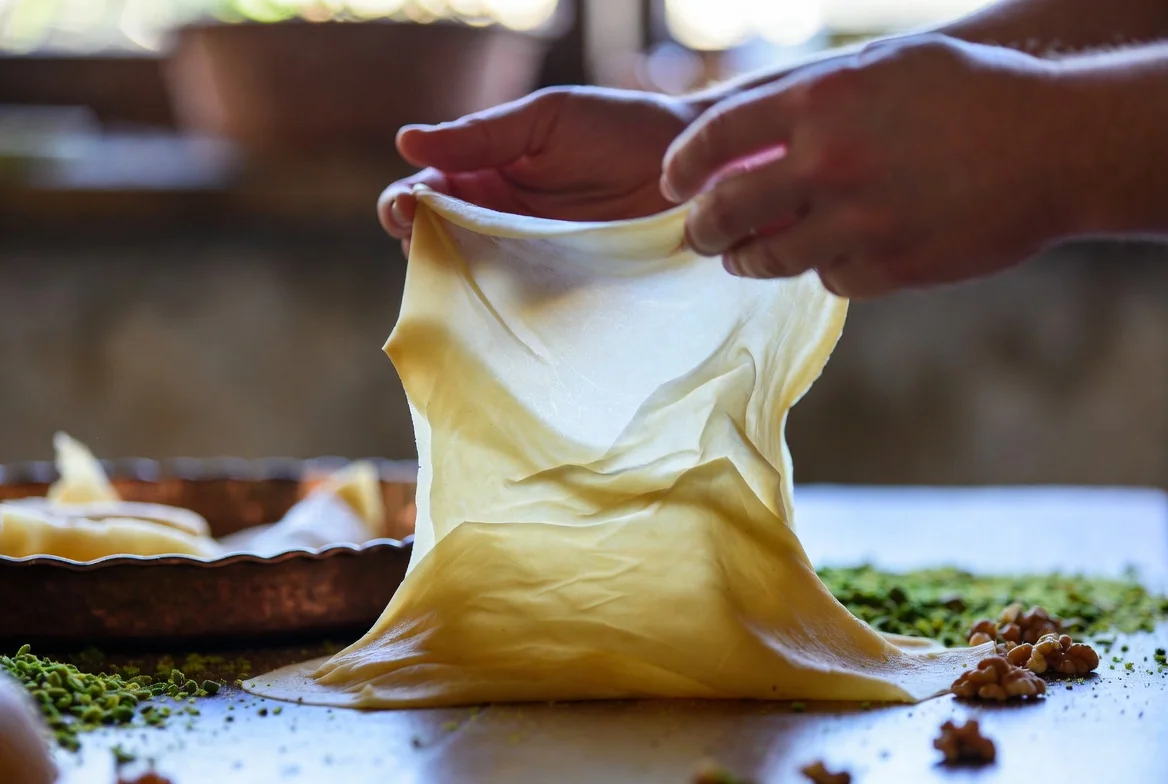
The phyllo dough — yufka in Turkish, from the Old Turkic word yuvka meaning "thin" or "weak" — is the foundation on which all of baklava's complexity rests. And yet it is made from nothing more than flour and water. No eggs, no fat, no leavening. The simplicity of the ingredients is part of the challenge: there is nowhere to hide. The quality of the craft is entirely visible in the final product. At its best, freshly made yufka is nearly transparent, thin enough to read text through, elastic enough to stretch across a metre-wide surface without tearing, light enough that a slight movement of air causes it to ripple like a silk curtain.
The choice of flour matters more than most people realise. A high-gluten bread flour provides too much resistance and tends to snap rather than stretch; a very low-gluten cake flour lacks the structural integrity to hold together across a wide surface. The ideal yufka flour falls between these extremes — medium-strength, finely milled, with enough gluten development to allow long, gradual stretching without tearing, but not so much that the dough fights back. Hydration is equally critical: a dough mixed to around 55 to 60 percent water by flour weight gives the right balance of pliability and structure. Too dry and the dough cracks at the edges before the centre can be stretched; too wet and it sticks to everything, no matter how much starch is applied. The water used must be at room temperature, never cold — cold water tightens the gluten immediately, making the dough almost impossible to stretch within any reasonable time. The resting time — at least thirty minutes, often longer — is not optional. During rest, the gluten strands that were agitated during mixing gradually relax and realign into longer, more uniform chains, and the water molecules distribute evenly throughout the dough matrix. A dough that is rolled immediately after mixing will fight the oklava at every pass. A properly rested dough yields willingly, almost as if it wants to be thin.
The oklava is the long, narrow rolling pin used throughout Turkish pastry-making. It is typically around seventy centimetres long and barely two centimetres in diameter — a slender dowel rather than the short, fat rolling pins familiar from Western kitchens. Its slenderness is the point. The oklava applies pressure only along a narrow line at a time, which allows the dough maker to work systematically across the surface, building up an even thinness through dozens of rolling passes rather than attempting to flatten the entire sheet at once. Between passes, the dough is dusted with a fine corn starch — not flour, which would incorporate into the dough and change its texture — to prevent sticking. Sheet by sheet, the yufka is rolled, dusted, and stacked until the baker has accumulated the thirty to forty-five sheets required for a proper tray of baklava.
Professional yufka makers work with a speed and economy of movement that looks effortless and took years to acquire. They can tell by the resistance of the dough — by the way it pushes back against the oklava, or doesn't — whether the gluten is sufficiently relaxed for the next pass. They can tell by touch whether a sheet has reached the right thinness without holding it up to the light. The classic test — holding the rolled sheet up before a window and reading a newspaper headline through it — is real, not apocryphal. But an experienced baker does not need the test. They know. That knowledge lives not in the mind but in the hands, and it comes only from repetition at a scale that most modern people will never achieve.
"In every layer of yufka there is a decision — to push a little further, or to stop. The best baklava lives in that margin, that final millimetre between thin enough and too thin."
Clarified Butter: The Silent Architect
If yufka is the structure, clarified butter — sadeyağ, derived from tereyağı — is the soul. Between every single layer of phyllo, a pastry brush deposits a thin film of warm, pure butterfat. No water. No milk solids. Only the pure fat, which when heated becomes a transparent golden liquid that has been separated from the proteins and lactose naturally present in ordinary butter. This process of clarification — achieved by melting butter gently over low heat, allowing the solids to sink, and carefully ladling away the clear fat — is essential for two reasons. First, milk solids burn at the temperatures used to bake baklava, turning the layers bitter and unevenly coloured. Second, water content in unclarified butter creates steam inside the tray, softening layers that should remain distinct and crisp. Pure butterfat has neither of these failings.
The quality of the butter determines the quality of the baklava more than any other single ingredient — more than the flour, more even than the nuts. This is a claim that surprises people who have never tasted the difference, but it is unambiguously true. Butter produced from the milk of sheep grazing on the aromatic herbs and grasses of southeastern Anatolian highlands has a complex, slightly gamey richness that cannot be replicated by generic cow-milk butter. It is not a subtle difference; it is the difference between a baklava that tastes like sweetened pastry and one that tastes like a landscape. At Saytad, we render our clarified butter slowly, over a low flame, taking care never to let the solids caramelise before they can be removed. The result is a pure, golden, extraordinarily fragrant fat that smells faintly of honey even before it reaches the pastry.
The application of butter is itself a skill. Too little, and the layers fuse together in the oven, losing their individual identity and becoming a dense slab rather than a cascade of distinct, papery strata. Too much, and the baklava is greasy and heavy, the clarified fat pooling at the base of the tray and soaking the bottom layers through. The correct amount — which no recipe can specify precisely, because it depends on the thickness of the yufka sheets and the water content of the particular butter — is somewhere between these extremes, applied in a thin, even film with a soft brush, working quickly before the sheet dries and becomes brittle. Each layer is buttered. Every single one. Forty layers means forty applications. There are no shortcuts and no layers that can be left dry without the finished product betraying exactly where the shortcut was taken.
The Green Gold of Gaziantep
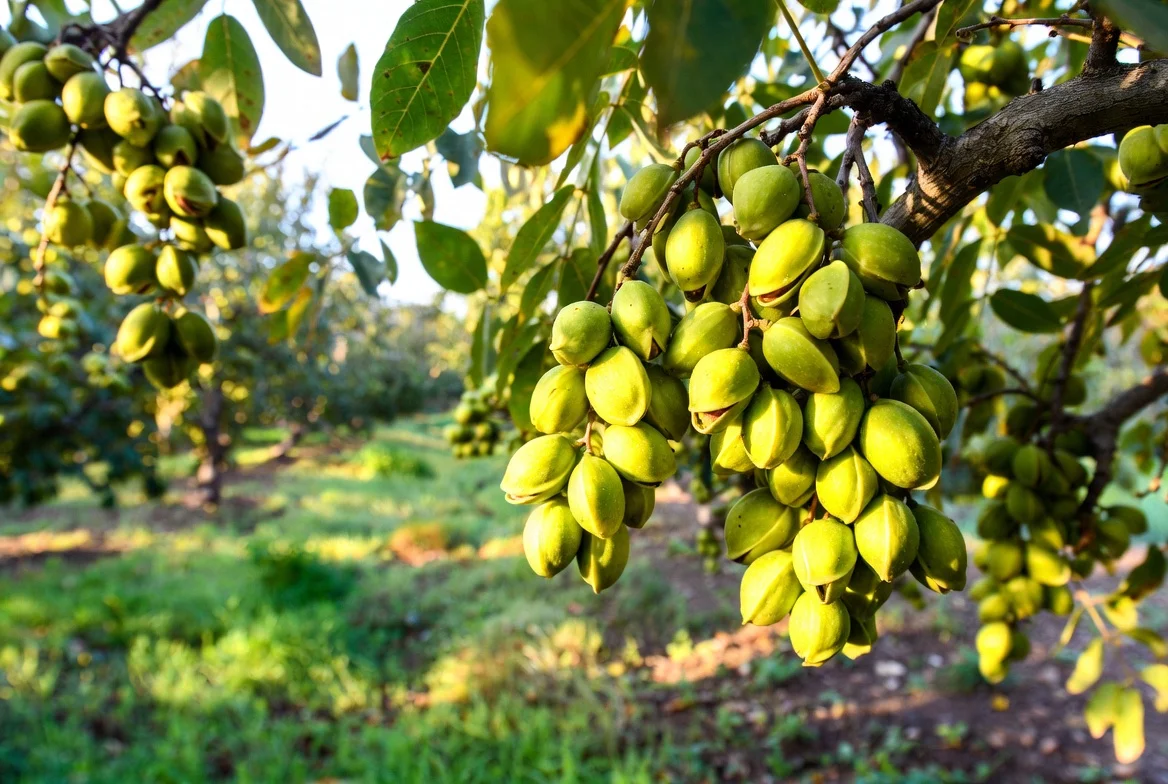
There is a reason Gaziantep pistachios are called yeşil altın — green gold. The city sits in southeastern Anatolia on the edge of the Fertile Crescent, where ancient volcanic soils, long hot summers, and sharply cold winters create growing conditions of extraordinary specificity. The result is a pistachio unlike any other in the world: small, intensely aromatic, with a natural colour so vivid and green — a bold, almost electric chartreuse — that food technologists have been unable to replicate it with any amount of artificial colouring. Over twenty-two million pistachio trees stretch across the orchards of the Gaziantep region. The harvest, conducted over a few intense weeks in late summer, is treated with the reverence of a cultural ritual: entire families move into the orchards, working from dawn to dusk, with the understanding that every day of delay after the optimal moment diminishes the quality of the crop.
That optimal moment is the key to the pistachio's superiority. Gaziantep pistachios are harvested approximately one month before they reach full botanical maturity — at precisely the point when their oil content peaks and their flesh has developed its maximum flavour intensity but has not yet begun to convert those oils into starch. This counterintuitive early harvest produces a nut that is bold, slightly sweet at first, then deepening into a rich, earthy, almost resinous flavour that mellows and sweetens further when exposed to oven heat. The fully ripe pistachio, by contrast, is drier, less vibrant in both colour and taste, its complexity already beginning to flatten. The difference is significant, and it explains why Antep pistachios command a substantial premium over pistachios from other regions, including those from California, Iran, and other parts of Turkey.
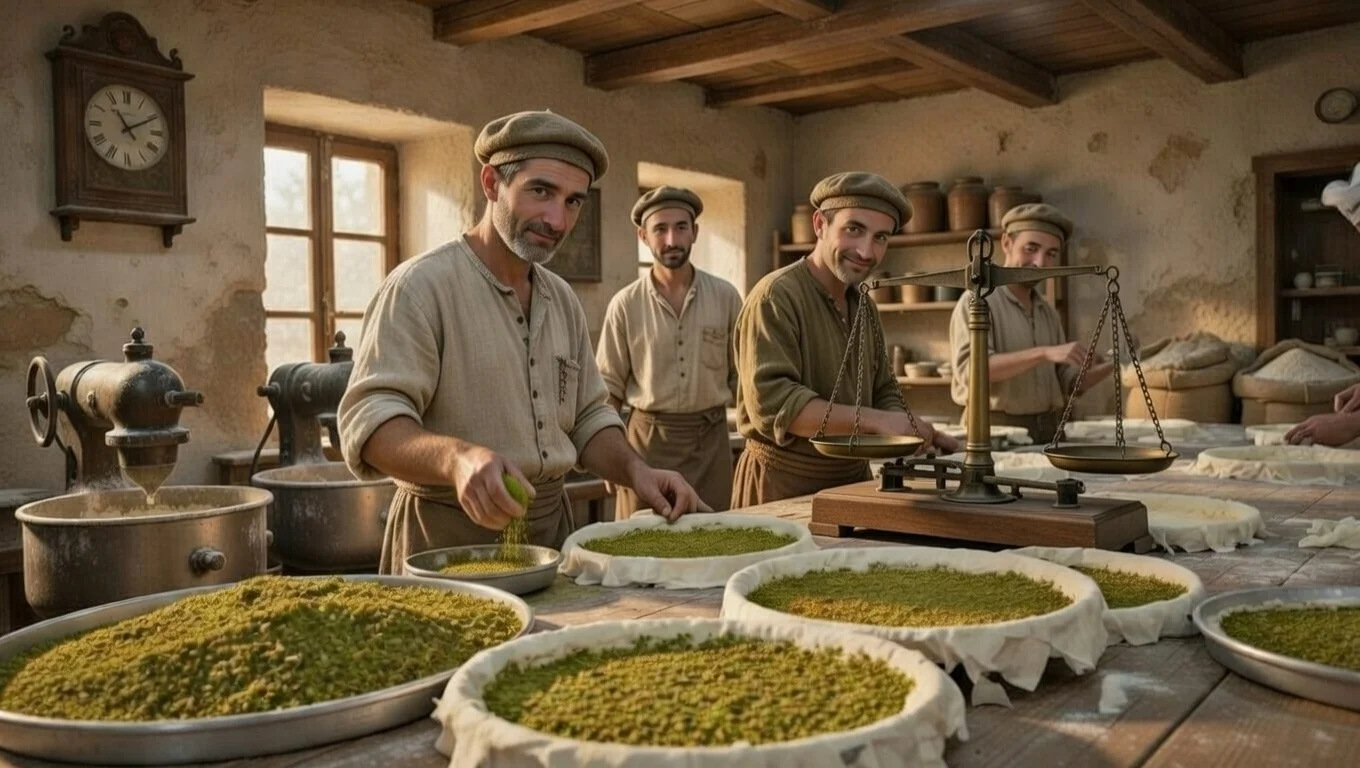
For our baklava, the pistachios undergo stone grinding — a process fundamentally different from mechanical chopping or food-processor pulverising. Stone grinding, done in a traditional taş değirmen (stone mill), crushes the nuts between two rotating millstones at low speed and without significant heat generation. This preserves the volatile aromatic compounds in the pistachio's oils, which are destroyed by the friction heat of fast mechanical grinding. The result is a coarse, sandy, faintly oily powder that distributes evenly between layers without clumping, releases its flavour slowly during baking, and produces a finished pistachio note that is rounded and complex rather than sharp and one-dimensional. We use nothing else in our filling. No walnuts, no hazelnuts, no almonds, no cashews. No artificial colouring, no extracts, no flavour enhancers. Antep fıstığı stands alone — because when you have the best, you do not dilute it.
The Assembly: Forty Layers of Precision
The assembly of a tray of baklava is one of the more meditative tasks in the pastry kitchen. It requires sustained attention to detail over a period of forty-five minutes to an hour, and it rewards that attention with a product whose quality is directly proportional to the care invested. The copper tray — traditionally round, though rectangular trays are now common — is first brushed generously with clarified butter to prevent sticking and encourage the base layers to crisp properly during baking.
The first twelve to fifteen sheets of yufka go in without filling — plain phyllo sheets, each buttered individually, building a base that will provide structural support for the nut layer and eventually absorb the syrup from below, becoming the dense, syrup-laden foundation of the finished product. These base layers are where the most butter is concentrated; they need to be the most robustly structured part of the baklava, and a generous application of ghee here is not extravagance but engineering. Then comes the pistachio layer — spread evenly, to within a centimetre of the tray's edge, no thicker in the centre than at the corners. Evenness is critical. A thicker filling in the centre means the centre will bake differently than the edges, and the syrup will penetrate unevenly. The remaining sheets of yufka go over the filling, each one buttered, until the top layer is sealed. A final generous brushing of warm ghee over the uppermost sheet gives the baklava its characteristic golden gloss.
The ratio of phyllo to filling is one of the most debated variables in baklava-making. Too many layers relative to the nut content and the baklava becomes dry and bland, a vehicle for butter rather than an expression of pistachio. Too little phyllo and the baklava collapses during cutting, the filling spilling out rather than being held cleanly between layers. The classic Gaziantep ratio — which Saytad follows — concentrates on achieving a balance where each bite delivers an equal proportion of crisp pastry and intensely nutty filling, with neither dominating.
Cut Before You Bake: A Counterintuitive Essential
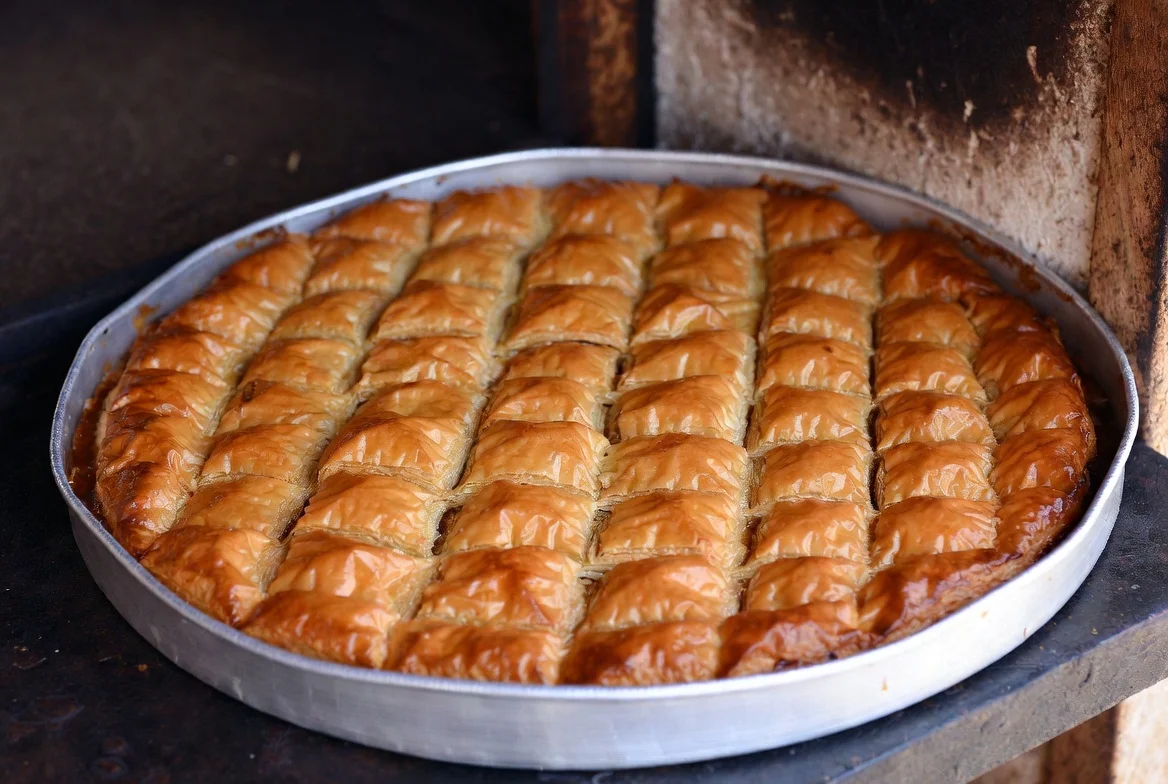
One of the most counterintuitive steps in baklava-making is the moment of cutting. The tray of raw, uncooked baklava — still soft and pliable from the assembly — is cut into its final diamond or rectangular shapes before it enters the oven. This strikes newcomers to the craft as strange. Why cut it when it will only be cut again to serve? The answer lies in physics and in the syrup's role in the finished dessert.
The cuts, made with a sharp knife through all layers before baking, serve two purposes. First, they allow the heat of the oven to penetrate the layers evenly. A sealed tray of baklava bakes from the outside in; without cuts, the centre of each piece would still be half-raw when the exterior had already coloured. The cuts create pathways for hot air to circulate into the interior of each piece, ensuring even baking throughout. Second, and more importantly, the cuts create channels for the syrup. When cold syrup is poured over the hot baked baklava, it needs pathways to penetrate beyond the crisp top layers and reach the nut filling and the base layers beneath. Without pre-baking cuts, the syrup pools on the surface and seeps in only at the edges. With cuts, it travels immediately and deeply into the heart of each piece, distributing sweetness and moisture with precision.
The traditional cut for Gaziantep baklava is the diamond — a diagonal grid that produces lozenge-shaped pieces, each one roughly five centimetres across. The diamond is not purely aesthetic. The angled cut exposes a greater surface area of filling per piece than a square grid, which means more pistachio visible from the top, more syrup penetration through the cut edges, and a more visually compelling presentation. The depth of the cut must pass all the way through every layer to the base of the tray. A partial cut that stops halfway down leaves some layers uncut, which creates resistance during serving and causes the pieces to break unevenly.
Reading the Oven: The Bake
Baklava is baked low and slow — a principle that applies equally to traditional wood-fired ovens and modern electric or gas alternatives. High heat cooks the surface too quickly, turning the top layers dark before the interior has had time to crisp and the butter has fully permeated each sheet. The goal is a gentle, sustained heat — typically around 160 to 170 degrees Celsius — that allows the butter between the layers to foam, separate, and evaporate its water content gradually, encouraging each layer to puff and separate from its neighbours.
The visual stages of a properly baking baklava are as instructive as any thermometer. At first, nothing visible happens: the tray sits pale and flat, looking much as it did when it entered the oven. After twenty minutes or so, the edges begin to show the first hint of gold — the butter nearest the tray's rim is cooking first, where the metal conducts the most heat. At thirty to forty minutes, depending on the oven, the colour begins to spread inward from the edges and outward from the cuts, the fat in the phyllo layers rendering and the surfaces beginning to take on their characteristic amber hue. The moment to watch for — the moment that separates a properly judged bake from one pulled either too early or too late — is when the entire surface has reached a uniform, deep amber-gold, with no pale patches and no dark spots. At that point, and only at that point, the tray is removed.
Traditional copper trays conduct heat differently from modern aluminium or stainless alternatives. Copper's thermal conductivity is superior, and it also has natural antibacterial properties that old-world pastry makers valued without understanding the chemistry behind them. A seasoned copper tray that has been used for years develops a cooking patina on its surface that distributes heat more evenly than a new pan of any material. Many of the oldest bakeries in Gaziantep still use copper trays that are decades old, and the bakers will tell you — only half-jokingly — that a significant portion of their baklava's quality resides in the pan.
The Syrup: Chemistry in a Copper Pan
A common misconception about baklava is that the syrup is merely sweetener — a finishing touch applied after the real work is done. In reality, the şerbet is one of the most technically demanding components of the entire process, and a syrup made incorrectly will ruin a baklava that was otherwise perfectly executed. The syrup is made with four ingredients: sugar, water, fresh lemon juice, and a small amount of salt. Each performs a specific function, and none can be removed without consequence.
Sugar provides sweetness and, when cooked to the correct concentration, the body and viscosity that allows the syrup to cling to the pastry layers rather than running straight through them to pool at the base. The concentration is determined by the ratio of sugar to water and the simmering time: too thin and the syrup soaks through too quickly, making the baklava wet and limp; too thick and it sets on the surface before it can penetrate, leaving the inner layers dry. Water is the solvent, the medium through which the sugar travels. Lemon juice performs a process of inversion chemistry: the citric acid breaks the sucrose molecules into their component parts — glucose and fructose — which remain liquid at room temperature and resist crystallisation. A syrup made without lemon will turn grainy and sandy as it cools, producing baklava with an unpleasant gritty texture on the palate. Salt, added in a very small quantity, suppresses the perception of excessive sweetness and enhances the other flavours — a principle borrowed from confectionery-making that applies here with equal force.
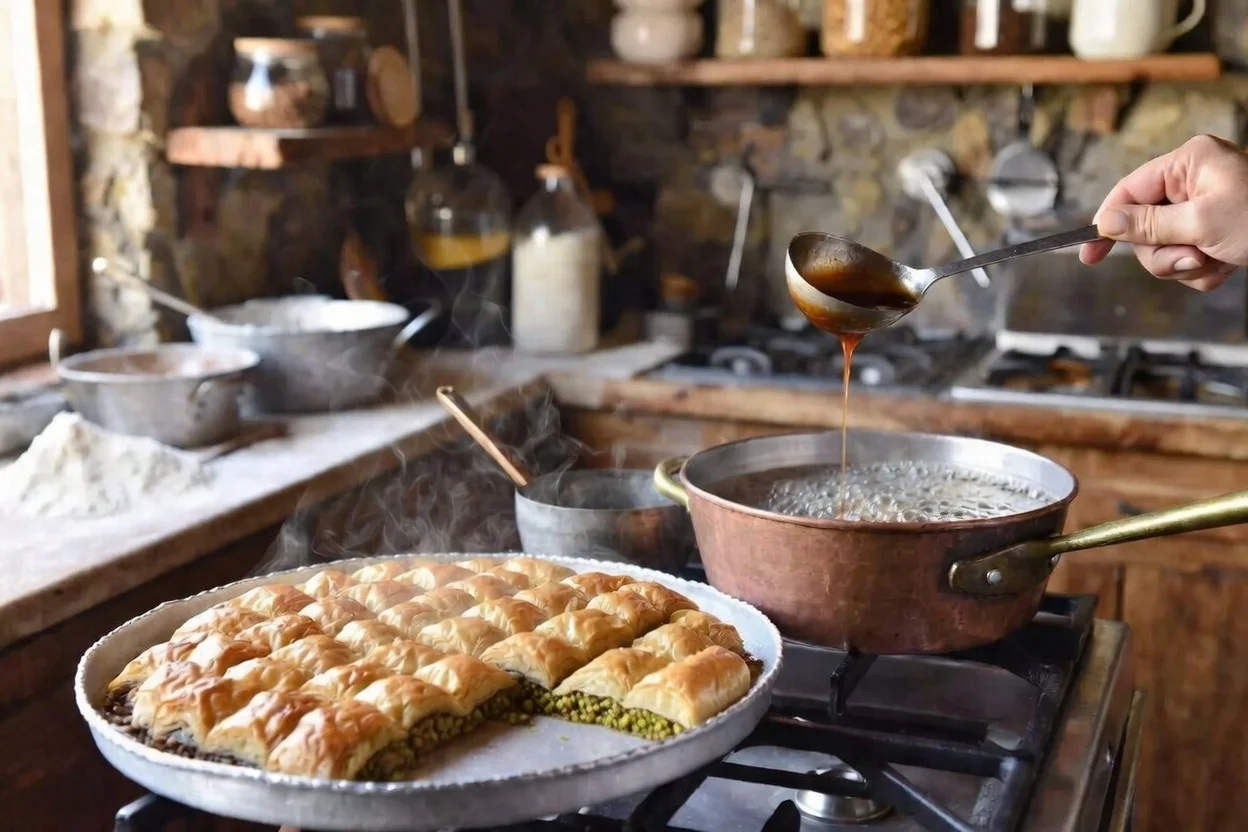
The simmering process requires attention and patience. The syrup is brought to a boil, then reduced to a very gentle simmer and allowed to cook, undisturbed, for twenty to thirty minutes. Stirring during this phase encourages crystallisation and must be avoided entirely. The lemon juice is added in the final ten minutes, not at the start — added too early, it makes the syrup too fluid and prevents it from reaching the correct concentration. The target sugar concentration, for those who work with a refractometer, is approximately 28 to 32 degrees Brix — a reading at which the syrup holds enough dissolved sugar to behave with the right viscosity, but has not yet tipped into the heavier concentration that would make it set solid on the pastry surface. A candy thermometer reads this range as roughly 105 to 108 degrees Celsius. But experienced pastry makers use neither instrument. Their test is simpler: a drop of syrup on a cold plate should flow slowly when the plate is tipped — a lazy, unhurried movement, neither running freely like water nor holding its shape like a gel. That precise consistency — fluid but controlled, viscous but not thick — is the target, and recognising it takes the kind of repeated exposure that no thermometer can substitute for.
The most important rule in the entire baklava-making process — the one that separates mediocre baklava from transcendent baklava — is the temperature contrast between syrup and pastry at the moment of pouring. The syrup must be cold, or at most room temperature, when it is poured over the baklava fresh from the oven. This is counterintuitive to anyone who has not been taught it explicitly: why would you want cold syrup? The answer is in the physics. Hot syrup poured over hot pastry encounters no temperature differential; it seeps in too quickly and too deeply, saturating the layers uniformly and destroying the textural contrast between crisp surface and tender interior. Cold syrup poured over hot pastry creates a dramatic, immediate sizzle — the sudden temperature contrast causes the outermost layers to seal and crisp further, while the syrup is drawn inward by the heat differential, penetrating slowly and progressively over the next several hours rather than all at once. The result is that paradoxical texture that makes baklava extraordinary: shatteringly crisp on the surface, gradually yielding as you push through, deeply sweet and saturated at the base.
The Resting: When Baklava Becomes Itself
The baklava is not finished when the syrup is poured. In a sense, it is only just beginning. The next four to eight hours — the resting period — are when the transformation occurs. The syrup, initially pooled in the cuts and along the surface, migrates slowly through capillary action into the interior of each piece, moving from the wet cuts inward through the butter-lubricated layers, reaching the pistachio filling and eventually the base. During this process, the sugar crystallises very slightly against the pastry layers, binding them loosely together and giving the finished baklava its characteristic texture — not flaking apart at the touch, but yielding cleanly when pressed, each layer distinct but no longer fully separate.
The ideal eating window for baklava is a question that generates strong opinions. Many traditionalists insist that baklava is best on the day it is made, before the syrup has fully penetrated and while the surface still has maximum crispness. Others argue that twenty-four-hour-old baklava, where the syrup has fully distributed and the flavours have had time to integrate, represents the perfection of the form. There is truth in both positions. Fresh baklava has a vivid, almost aggressive quality — the butter is still warm in the memory of the pastry, the pistachio sharp and immediate, the syrup present on the tongue as a distinct sensation rather than a diffuse sweetness. Day-old baklava is rounder, more harmonious, the flavours having settled into a unified whole. At Saytad, we prepare fresh each morning and consider both stages worthy. We simply encourage you not to wait longer than forty-eight hours, after which the surface softness overtakes the crispness entirely and the baklava becomes, however deliciously, a different dessert.
A World of Baklava: The Great Regional Debate
Baklava is made across a vast geography — from the Balkans to the Levant, from the Caucasus to the Maghreb — and each culture has shaped it profoundly in its own image. Understanding these variations is not merely academic; it illuminates what Turkish, and specifically Gaziantep, baklava is striving for by showing what it is not.
Greek baklava uses phyllo sheets that are noticeably thicker than the Antep style, producing a chewier, more substantial bite. The syrup is honey-based rather than sugar-based, which gives it a floral warmth and a slightly sticky quality that Turkish bakers consider excessive. Cinnamon and cloves are added to the nut filling — walnuts are the standard Greek nut, pistachios the exception rather than the rule — producing a warmly spiced flavour profile that is unambiguously festive and appealing, but fundamentally different in intent from the Turkish model. Where Turkish baklava is restrained and austere, Greek baklava is rich and expressive. Neither is wrong. They are answers to different questions.
Lebanese baklava is defined above all by its restraint with sweetness. The syrup is lighter, often flavoured with orange blossom water or a combination of orange blossom and rose water, and is applied more sparingly than in the Turkish tradition. The result is a more delicate dessert that showcases the flavour of the nut more clearly — Lebanese bakers use pistachios, often mixed with cashews, ground finely rather than coarsely. The pastry sheets are thinner than Greek baklava but slightly thicker than Antep-style yufka. Syrian baklava follows a similar logic but leans more heavily into rose water, creating a distinctly floral character, and frequently incorporates pine nuts alongside pistachios for textural complexity.
Iranian baklava — called baklava-ye Yazdi or variations depending on the region — is perhaps the most distinctive of all. Cardamom, saffron, and rose water are combined in the syrup, producing a deeply aromatic, almost perfumed sweetness that is closer to a confection than a pastry. The dough tends to be thicker and the nut filling is often combined with dried fruits. In Armenia, cloves and cinnamon are added to the walnut filling, and the syrup includes honey. In Algeria and Morocco, orange blossom water dominates, and the nuts are typically almonds. In the Gulf states, pistachios and cashews are combined, and the syrup is sometimes supplemented with rose water.
Each of these traditions represents genuine excellence in its own terms. But Turkish baklava — and specifically the Gaziantep school — occupies a singular position in this global family. It is, arguably, the most technically demanding version, the most restrained in its flavouring (no spices, no floral waters, no aromatics beyond the raw ingredients themselves), and the most ruthlessly dependent on the quality of those ingredients. There is nothing to hide behind. No cardamom to cover an inferior nut. No honey to compensate for under-baked pastry. No rose water to distract from inadequate butter. When the ingredients are exceptional, nothing else is needed. When they are not, there is nowhere to hide. This is the challenge and the glory of the Antep tradition.
The Anatomy of Bad Baklava
Understanding what makes baklava great requires understanding what makes it fail. Bad baklava is more common than good baklava, and learning to recognise the specific failings helps you appreciate what you are experiencing when everything is right.
The most common failing is excessive sweetness — a cloying, one-dimensional sugariness that overwhelms the nuts and the butter and leaves the palate exhausted rather than satisfied. This results from a syrup that is too concentrated, applied too generously, or poured hot over hot pastry, causing it to penetrate too quickly and too deeply. Closely related is the soggy baklava: dense, wet, with layers that have lost their individual identity and merged into a uniform mass. This is invariably the result of hot-on-hot syrup application. Greasiness — the sensation of butter pooling on the tongue rather than contributing to a richness that dissolves cleanly — comes from inferior fat, too much fat, or butter that was not properly clarified. A bitter or slightly burnt edge taste indicates milk solids that were not fully removed during clarification.
Flavourless baklava — perhaps the most disappointing variety — is typically the product of old or low-quality nuts, commercial pastry made with vegetable shortening instead of butter, and sheets of phyllo that are thick enough to dominate the flavour. Walnut substituted for pistachio in a recipe that calls for pistachio produces a detectable flatness; walnut has its virtues, but it lacks the aromatic intensity of a good Antep fıstığı, and its bitterness can clash with the sweetness of the syrup in a way that pistachio does not. Finally, the thin-and-dry baklava — too many layers relative to the filling, not enough butter between sheets, baked slightly too long — produces a result that crumbles rather than yields and lacks the yielding interior that is the signature of properly made baklava. These are the reasons why great baklava is rare, and why finding a maker who gets all of these variables right simultaneously is worth celebrating and returning to.
How to Eat Baklava at Its Best
Baklava should never be eaten cold. This is one of the few absolute rules in the world of Turkish sweets, and it applies regardless of how tempting it is to cut straight into a box that has just arrived from the pastry shop. Cold baklava has contracted fats and a hardened syrup; the layers are stiff, the flavours muted, the texture dull. Room temperature — not warm, not cold, simply at the ambient temperature of a comfortable room — is when baklava is best. If you have refrigerated baklava for any reason, allow it to come fully to room temperature before eating, which will take at least forty-five minutes.
The traditional accompaniment to baklava in Turkey is unsweetened çay — black tea, brewed strong in a double kettle and served in small tulip-shaped glasses. The bitterness of plain black tea cuts through the sweetness of baklava with surgical precision, clearing the palate between bites and allowing you to fully experience the baklava's flavour rather than accumulating sweetness to the point of saturation. Water also works well for this purpose. What does not work is sweetened tea, coffee with sugar, or milk — all of which add sweetness to sweetness and accelerate palate fatigue. The Turks understood this pairing intuitively, and they were right.
The proper way to eat a piece of baklava is with a small fork, applying light pressure to the top layer and cutting through cleanly rather than pressing down with force and crushing the structure. The piece should yield in stages: first the crisp top layers fracturing delicately, then the nut filling releasing its aroma as you press through, then the syrup-soaked base layers offering a contrasting softness and sweetness. Each of these three textures should be present in every bite. If the top layers have already softened and fused with the rest, the baklava has been left too long. If the bottom layers are dry and the syrup has not reached them, the baklava was not allowed to rest sufficiently after the syrup was applied. The perfect piece is a sequence of experiences compressed into a single bite — and the sensation of getting all three in proper balance is one of the quiet pleasures of a well-made Turkish sweet.
Every Tray Is a Continuation
We have been making baklava at Saytad since 1983, and in those forty-three years we have made hundreds of thousands of trays. We have adjusted temperatures, experimented with pistachio grind sizes, sourced butter from different farms, and refined every variable we could measure. What we have never done is change the fundamental approach: the same yufka thinness, the same ghee, the same Gaziantep pistachios, the same cold-syrup rule. Not because we are incapable of change, but because no change we have tried has improved on what was already working.
Baklava is not a recipe. It is a practice — a physical discipline that requires daily engagement to maintain and deepens with each repetition. The best bakers we know are not thinking about ingredients or ratios when they work; they are feeling the dough, reading the oven, listening for the right sizzle when the syrup hits. They have internalized the process to the point where the conscious mind steps back and the hands take over. That is what mastery looks like in this craft, as in all crafts, and it is what we aspire to in our kitchen every day. It is what makes every tray of Saytad baklava a continuation of a story that began in the ancient grain fields of Anatolia, was perfected in the imperial kitchens of Constantinople, and carries on — unbroken, unhurried, unchanged in its essentials — in the work we do today.